2006 NCDD Conference Guidebook and Videos
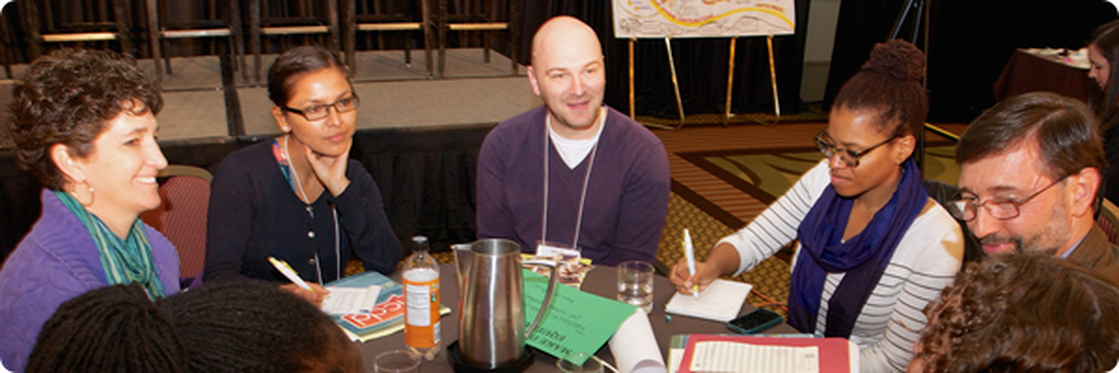
This five-minute video shows highlights from and participant comments on the 2006 National Conference on Dialogue & Deliberation in San Francisco. (continue)
Resources created by NCDD or created specifically for NCDD events and programs.
This five-minute video shows highlights from and participant comments on the 2006 National Conference on Dialogue & Deliberation in San Francisco. (continue)
AmericaSpeaks' 21st Century Town Meeting method creates engaging, meaningful opportunities for citizens to participate in public decision making. This unique process updates the traditional New England town meeting to address the needs of today's citizens, decision makers and democracy. (continue)
The Public Engagement Principles (PEP) Project was launched in mid-February 2009 to create clarity in our field about what we consider to be the fundamental components of quality public engagement, and to support President Obama's January 21, 2009 memorandum on open government. The following principles were developed collaboratively by members and leaders of NCDD, IAP2 (the International Association of Public Participation), the Co-Intelligence Institute, and many others. (continue)
Although we did not seek endorsements for the expanded text under the Core Principles for Public Engagement and their one-sentence descriptions, the text under the headers “In high quality engagement” and “What to avoid” was developed alongside the seven Core Principles in a highly collaborative and transparent manner. The purpose of the expanded text is to illustrate and breathe life into the principles, and should accompany the list of Core Principles whenever possible. We encourage you to adapt or revise this text for different audiences ... (continue)
Below are dozens of links to dialogue and deliberation success stories and case studies that are available online. Approaches covered include Deliberative Polling, Citizens Juries, Future Search, National Issues Forums, Jewish-Palestinian Dialogue, AmericaSpeaks, Study Circles, the Public Conversations Project, and Wisdom Councils. NCDD has been compiling these resources for the D&D community for several years, but we could really use your help keeping this page updated. Email us at ncdd@thataway.org with your additions and changes. (continue)
Need great quotes for a publication, article or report you're writing? This NCDD resource lists dozens of quotes organized by topic: dialogue; deliberation; listening; communication; truth, knowledge & exploration; conflict and transforming conflict; inclusion; democracy; action & change; and a miscellaneous category for other great quotes that are relevant to this work. (continue)
The following people helped gather this fabulous list of inspiring quotes: Judith Mowry, Diane Bock, Patrick Brown, Wal Cusworth, Rogier Gregoire, Sandy Heierbacher, DeAnna Martin, Susan Partnow, Harris Sokoloff, Dick Spady and Libby and Len Traubman. Have a suggestion for an addition to this list? Add a comment below. Categories… Dialogue Deliberation Listening Communication Knowledge, Truth & Exploration Conflict & Transforming Conflict Inclusion Democracy Action & Change Other Good Ones (continue)
Created by NCDD director Sandy Heierbacher in collaboration with Martin Carcasson, Will Friedman and Alison Kadlec (and based on Carcasson's paper Beginning With the End in Mind), the Goals of Dialogue & Deliberation graphic pictured here outlines 3 types of goals for public problem-solving work. In a nutshell, the three tiers of goals are individual and knowledge-based goals, immediate group/community outcomes, and longer-term capacity building and community change. Click on the image to view a larger version of the graphic. (continue)
A "frame" is a way of understanding or interpreting what is going on and how we should relate to it. How we frame an issue or conflict (or how it is framed for us) has a tremendous impact on what we do about it. This post was created in the NCDD wiki, and mainly features an article by Tom Atlee of the Co-Intelligence Institute. (continue)
Blogs, decision support systems, asynchronous communication, e-government, groupware, social media... those new to online dialogue & deliberation and high-tech collaboration can feel like they need to learn a completely new language just to begin understanding their options. Utilize our glossary of terms for high-tech collaboration to help you get by. (continue)